
Place-Making in the Age of Smart Infrastructure: Designing for Connection
The Soul of the Site
Why do our smartest cities and modern campuses often feel so stationary?
We’ve spent the last decade optimizing our urban environments for efficiency, but in the rush to modernize, we’ve often overlooked the human element. Infrastructure shouldn’t just be something we use; it should be something we experience. A “space” only becomes a “place” when it fosters a genuine connection between people and the environment they share.
In 2026, leading architects, developers, and municipalities are looking beyond the utility of smart tech. They are focusing on place-making—the art of using infrastructure as an anchor for community life.
People don’t just want practicality; they want beauty, movement, and a sense of shared identity. They want landmarks that feel alive and responsive to the world around them.
Building Social Anchors Across Industries
The SmartFlower serves as a centerpiece for this movement, acting as a sculptural heartbeat that strengthens the bond between a location and its people.
- Electric Vehicle Hubs: Don’t just offer a charging plug; create a welcoming, well-designed waiting space. Pair EV charging with a kinetic sculpture that mirrors the sun-tracking rhythms of sunflowers, so the stop feels intentional—a small, recognizable landmark rather than just another stall in a lot.
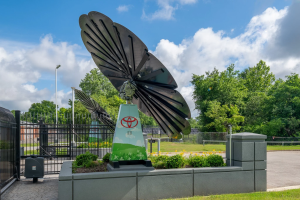
Installation at Electri-CITY Park at Chuck Hutton Toyota in Memphis, TN. Photo credit: Grinder Taber Grinder
- Higher Education: On a university quad, it’s more than a living laboratory. It becomes a natural meeting point where students gather, fostering curiosity and turning a campus “pass-through” into a collaborative hub.
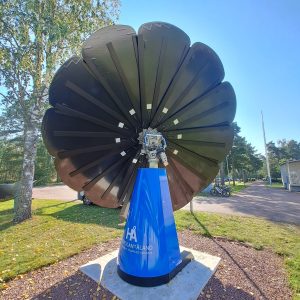
Installation at Åland University of Applied Sciences in Åland, Finland.
- Civic Spaces: Foster a digital-age town square. Whether it’s providing a backdrop for a local market or a landmark for a city park, the SmartFlower creates a focal point that people navigate toward and talk about.
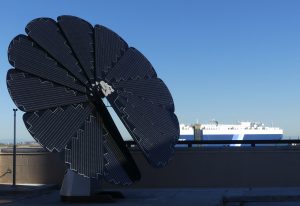
Installation at 88 Black Falcon Pier in Boston, MA.
Function is the Baseline; Fascination is the Goal
Architecture in 2026 is about “Functional Art”: technology that doesn’t just work but moves people. The goal is to move past static design and create environments that breathe.
When we integrate infrastructure that reacts to the sun and moves with the day, we do more than generate clean energy. We create a landmark that people feel connected to, turning a generic site into a vibrant, shared experience.
How are you humanizing your smart city tech? Let’s design spaces that move people. If you’re ready to turn your next project into a community anchor, it’s time to move sustainability into the heart of the conversation.


