
Earth Day 2026: 5 Ways Museums and Cultural Centers Are Protecting the Future with SmartFlower
For Earth Day 2026, we’re resuming our tradition of highlighting the different ways organizations use SmartFlower to help protect the planet. This year, we’re focusing on museums and cultural centers, who act as the front lines of public engagement and environmental stewardship. From immersive science centers to world-class zoos, these landmarks are proving that sustainability is a story best told through action.
1. Children’s Discovery Museum of San Jose
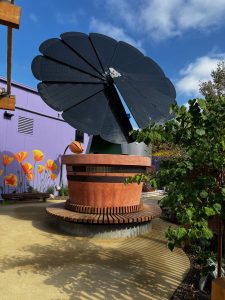
“Children learn through patterns, and by linking patterns, scale, proportion and symmetry to the things we see in nature, we’re helping children better understand the natural world.” — Marilee Jennings, Executive Director of Children’s Discovery Museum of San Jose
Standing as a centerpiece of the museum’s Exploration Portal, three SmartFlowers serve as an interactive lesson in how robotics can mimic the natural world. In the fast-paced environment of Silicon Valley, this installation offers families a moment to pause and observe clean energy being harvested in real-time. The system’s graceful movement and self-cleaning petals do more than just generate power; they spark curiosity about STEM and the future of sustainable design. By integrating this sculptural solar solution, the museum provides a hands-on platform where young visitors can discover the symmetrical beauty of the environment while learning how innovation can protect it.
2. Global Sustainability Academy

“The Global Sustainability Academy represents the kind of partnership that translates national vision into practical progress. By embedding sustainability and innovation within the industry, it strengthens the foundations of Oman’s knowledge-based economy and builds the capabilities our future industries will rely on.” – H.E. Dr. Saleh bin Said Masan, Undersecretary of the Ministry of Commerce, Industry and Investment Promotion for Commerce and Industry
As the first of its kind in Oman, the Global Sustainability Academy serves as a high-tech hub designed to cultivate the next generation of environmental leaders. At the heart of this mission sits Oman’s first SmartFlower, an iconic installation that functions as a hands-on classroom for solar technology. The Academy integrates this kinetic solar system alongside circular design materials and renewable energy zones to create a tangible roadmap for the country’s economic diversification. By providing a backdrop for programs like “Kids in STEM” and “She STEMS,” the SmartFlower helps students visualize the mathematical patterns of energy production, turning abstract climate goals into a practical, visible reality.
3. Franklin Park Zoo
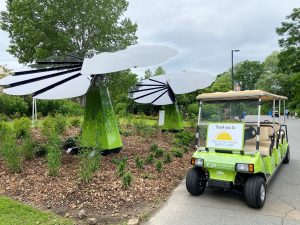
“We really liked the eye-catching look of the SmartFlower and how it is self-contained. It is a wonderful opportunity to highlight solar energy and educate guests about its importance […] The SmartFlowers align with our mission perfectly and presents us with the opportunity to talk about the importance of sustainable practices.” – Robert Chabot, Chief Operating Officer at Zoo New England
At the Franklin Park Zoo, sustainability has found a home alongside the wildlife, with two SmartFlowers blooming near the Butterfly Hollow and Giraffe Savannah exhibits. These striking green units generate enough clean energy to power the zoo’s carousel and a fleet of solar-charged golf carts, effectively turning a day of play into a lesson in conservation. By mimicking the movement of real sunflowers, the installations act as a natural focal point for visitors, bridging the gap between mechanical innovation and the natural world. More than just a power source, these solar flowers serve as a visual narrative of the zoo’s dedication to preserving habitats and inspiring guests to protect the planet for generations to come.
4. Anaheim Sustainability Education Center
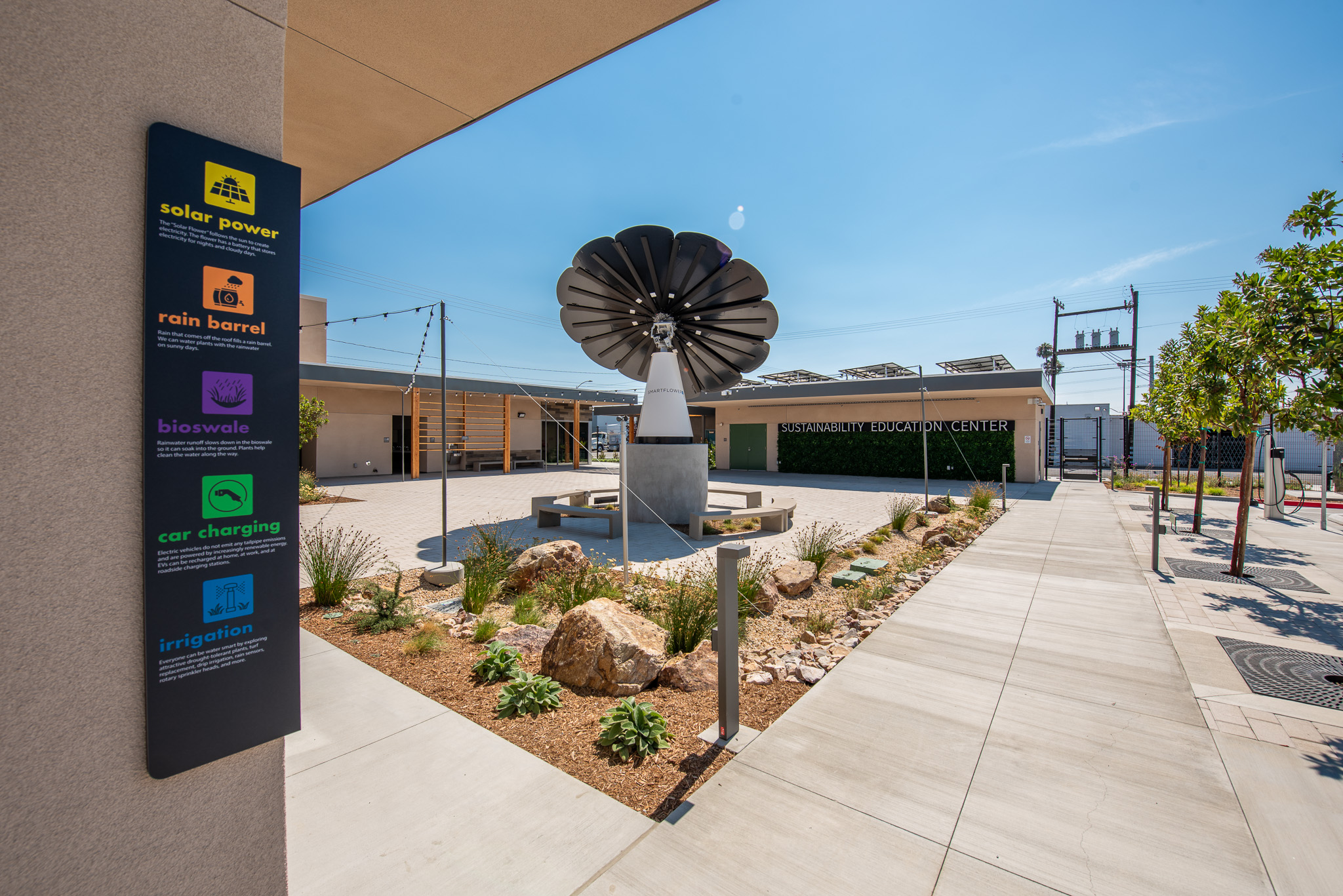
“The facility provides regional, educational, and workforce development resources to the local community that educates residents on the benefits of renewable energy… and prepares students for sustainability careers in STEM-related fields.” – Anaheim Sustainability Education Center Project Vision
Located in the center of Anaheim’s outdoor educational garden, the SmartFlower acts as a visible symbol of the city’s shift toward clean energy. Unveiled during a ceremony involving local students and elected officials, the installation serves as the visual heartbeat of a facility dedicated to workforce development and technical training. Beyond its sculptural beauty, the SmartFlower works alongside interactive displays to provide a living laboratory for residents to explore electric transportation and water technologies. By showcasing renewable energy in such an accessible, public space, the center is helping the next generation of STEM professionals visualize their career paths while rooting their education in the rhythmic, efficient patterns of nature.
5. Lee Richardson Zoo
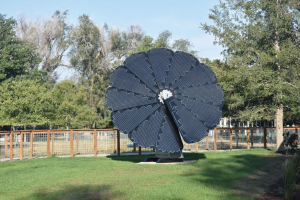
“Renewable energy is central in helping save wild habitat and allow animals a place to live. We hope our SmartFlower inspires people to think about the global impacts of climate change on wildlife and act to mitigate it.” – Max Lakes, Deputy Director of the Lee Richardson Zoo
As the first of its kind in Kansas, the SmartFlower at Lee Richardson Zoo serves as a direct link between clean energy and global conservation. Positioned right behind the Primate Forest – Lemurs! exhibit, the unit powers the primate building while offering guests a real-time look at solar production via an integrated power meter. By tracking the sun’s movement, like the sunflowers of the Kansas plains, the installation helps visitors visualize the connection between local energy choices and the preservation of distant habitats like the rainforests of Madagascar. Through interactive “Story Time” programs and visual demonstrations of biomimicry, the zoo is turning a technological marvel into a powerful lesson on how we can all help protect the world’s most vulnerable species.


